
Leadership that delivers outcomes
Behaviour, not capability, determines results.
flowprofiler® makes it visible.
The Outcome Problem in Leadership
Organisations invest heavily in leadership capability. They develop skills, define competencies, run programmes, and promote people with strong track records.
The assumption is clear: capable leaders will deliver results. Yet outcomes still fall short.
Execution breaks down. Strategic intent fails to translate into action. Decision quality deteriorates under pressure. Teams disengage, confidence erodes, and burnout becomes normalised rather than exceptional. These patterns are not isolated incidents, they repeat across sectors, levels, and organisational life cycles.
In most cases, the gap is not a lack of knowledge, experience, or commitment. Leaders generally understand what is required of them and are motivated to succeed. The issue emerges elsewhere.
It emerges in how leaders behave when pressure increases, when complexity rises, and when accountability sharpens. Under these conditions, behaviour shifts. Strengths can become excessive. Judgement narrows. Communication changes. The way a leader relates, decides, and responds begins to shape outcomes more than technical competence ever could.
When this happens, performance does not fail loudly at first. It degrades incrementally, through decisions that feel reasonable in the moment but accumulate into missed outcomes over time.
If organisational outcomes matter, leadership behaviour is not a “soft” consideration. It is a material risk variable!

❝It’s really had an impact on morale because we’re really investing in our people. As a leader, you must adapt. You can’t have the same leadership style for all of your team. We’re all different.❞
Why Leadership Outcomes Breakdown
Leadership outcomes rarely break down because leaders are incapable. They break down because the conditions leaders operate within change faster than traditional leadership assumptions allow.
As pressure increases, the context around leadership shifts. Time compresses. Stakes rise. Ambiguity grows. Competing demands intensify. In these conditions, leaders do not simply apply their skills more forcefully, they adapt their behaviour, often unconsciously, to cope.
This is where outcomes begin to drift.
Behaviours that are effective in stable conditions can become misaligned when complexity and accountability increase. A decisive leader may over-control. A collaborative leader may avoid necessary conflict. A resilient leader may persist beyond what the situation requires. None of these shifts reflect poor intent or weak capability, but they alter how decisions are made, how teams respond, and how work progresses.
Because these changes occur gradually, they are often invisible to the leader and difficult for others to name. Performance issues are then attributed to external factors, workload, or capability gaps, rather than to behavioural distortion under pressure.
Traditional leadership approaches struggle here because they assume consistency. They assess what leaders can do, what they know, or who they are, rather than how behaviour flexes, tightens, or escalates when outcomes are on the line. As a result, early warning signals are missed.
By the time outcomes clearly fail, the behavioural patterns that contributed to them are already embedded.
Leadership outcomes do not collapse suddenly. They erode through small behavioural shifts that go unexamined, unmeasured, and unaddressed at the point they matter most.
The Limits of Traditional Leadership Approaches
Most leadership approaches are designed to build capability. They define skills, outline competencies, assess potential, and support individual development. In stable conditions, these approaches can be effective.
However, they are not designed to explain why outcomes deteriorate when capable leaders operate under sustained pressure.
Competency frameworks assume that performance improves as skills increase. They describe what good looks like, but they do not account for how those same capabilities can become misapplied when demands intensify or conditions change.
Personality and preference models assume relative stability. They offer insight into tendencies and styles, but they are weak predictors of how behaviour will shift when accountability rises and margin for error narrows.
Engagement measures reflect sentiment rather than causality. They tend to lag performance issues rather than surface them early enough to influence decisions.
Coaching approaches can generate insight at an individual level, but insight alone does not consistently translate into better organisational outcomes. Without a shared behavioural lens, coaching remains difficult to scale and even harder to integrate into leadership decisions.
Each of these approaches answers a valid question. None of them is designed to answer the question leaders and organisations face when outcomes are at risk:
How will this leader behave when pressure increases, and what impact will that behaviour have on delivery?
Without a way to make behaviour visible, contextual, and decision-relevant, leadership risk remains largely implicit. By the time problems are recognised, they are already reflected in missed outcomes rather than addressed at their source.
Behaviour: The Missing Link Between Leadership and Outcomes
Leadership outcomes are delivered through behaviour. Every decision made, every conversation held, every response under pressure is a behavioural act with downstream consequences for execution, trust, and performance.
Behaviour is observable, situational, and adaptive. It is shaped not only by a leader’s capability or intent, but by the context in which they are operating. As pressure increases, behaviour changes, often in predictable ways. Leaders tighten control, withdraw, persist, avoid, or escalate without consciously choosing to do so.
These behavioural shifts are not inherently negative. In the right proportion and context, they are functional. The risk emerges when behaviour becomes miscalibrated, when a previously effective response is overused, underused, or applied without regard to changing conditions.
Outcomes are sensitive to this loss of proportion. Over time, miscalibrated behaviour affects decision quality, communication, psychological safety, and pace of execution. The impact may not be immediate, but it accumulates until performance, wellbeing, or trust is compromised.
This is why leadership outcomes cannot be fully explained by capability alone. Two leaders with similar experience and skill can deliver very different results depending on how their behaviour adapts under pressure.
Understanding leadership behaviour as a dynamic variable, rather than a fixed trait or static skill set, creates a different kind of visibility. It allows organisations to identify behavioural risk earlier, before it is reflected in missed outcomes or systemic strain.
When behaviour is treated as a central factor rather than a secondary consideration, leadership decisions move from assumption to insight.
How flowprofiler® Frames Leadership Behaviour
flowprofiler® frames leadership behaviour as a dynamic performance variable, not a fixed personal attribute. It is designed to make behaviour visible in the contexts where leadership outcomes are most exposed to risk.
Rather than assessing who a leader is, flowprofiler® focuses on how leadership behaviour is expressed under pressure, and how that behaviour shifts as complexity, accountability, and demand increase.
At the centre of this lens is the distinction between overuse and underuse of critical leadership behaviours. Behaviours that support delivery in one context can become excessive, constrained, or misapplied in another. It is this loss of proportion, rather than the absence of capability, that most often undermines outcomes.
flowprofiler® does not treat behaviour as inherently positive or negative. Instead, it examines:
◦ Which behaviours are being relied on most heavily
◦ Which behaviours are being suppressed or avoided
◦ How these patterns change under sustained pressure and,
◦ What impact they are likely to have on decision quality, execution, and team response
By framing behaviour in this way, flowprofiler® makes leadership risk explicit and discussable, rather than implicit and retrospective. Behaviour is no longer inferred from outcomes after the fact, but examined as an input that shapes those outcomes in real time.
This approach allows leadership behaviour to be considered with the same rigour as other performance variables. It supports more informed leadership decisions, particularly in roles and environments where the cost of behavioural miscalibration is high.
In this framing, leadership effectiveness is not determined by style, intent, or experience alone. It is determined by the leader’s capacity to adapt behavioural responses proportionally to what the context requires in order to deliver organisational outcomes.
❝Leadershipflow® has brought our organisational goals, vision and values to life.❞
– Joe Kelly, CEO North Ryde RSL, Australia

Leadership Outcomes That Depend on This Lens
Some leadership outcomes are particularly sensitive to behavioural mis-calibration. In these situations, capability, experience, and intent are necessary but insufficient. What determines success is how leadership behaviour adapts under pressure over time.
Outcomes that depend on a behavioural lens include:
Sustained execution in complex environments
When priorities compete and conditions change, outcomes rely on a leader’s ability to balance decisiveness with inclusion, pace with reflection, and persistence with adaptability. Behavioural overuse or underuse in these conditions directly affects delivery.
Quality of decision-making under pressure
As accountability increases, decision patterns narrow. Leaders may over-control, delay, avoid challenge, or push prematurely. Behavioural visibility allows decision quality to be examined before outcomes are compromised.
Team performance and discretionary effort
Leadership behaviour shapes psychological safety, trust, and engagement in real time. Small behavioural shifts, particularly under stress, influence whether teams remain aligned, resilient, and willing to contribute beyond minimum requirements.
Leadership endurance and sustainability
Outcomes are affected not only by what leaders deliver, but by how long they can sustain delivery. Behavioural patterns that drive short-term results can create longer-term burnout, dependency, or performance fragility if left unexamined.
Translation of strategy into action
Strategic clarity does not guarantee execution. Leadership behaviour determines whether direction becomes coordinated action, whether accountability is held, and whether momentum is maintained as conditions evolve.
In each of these outcome areas, failure rarely results from a lack of capability. It results from behavioural patterns becoming misaligned with the demands of the context.
A behavioural lens allows these risks to be identified and addressed earlier, when outcomes can still be influenced rather than explained after the fact.
What flowprofiler® Is, and, Is Not
Clarity about what flowprofiler® is, and what it is not, is essential to understanding its role in leadership outcomes.
What flowprofiler® is:
flowprofiler® is a behavioural intelligence framework used to examine how leadership behaviour influences organisational outcomes, particularly under pressure, complexity, and sustained accountability.
It provides: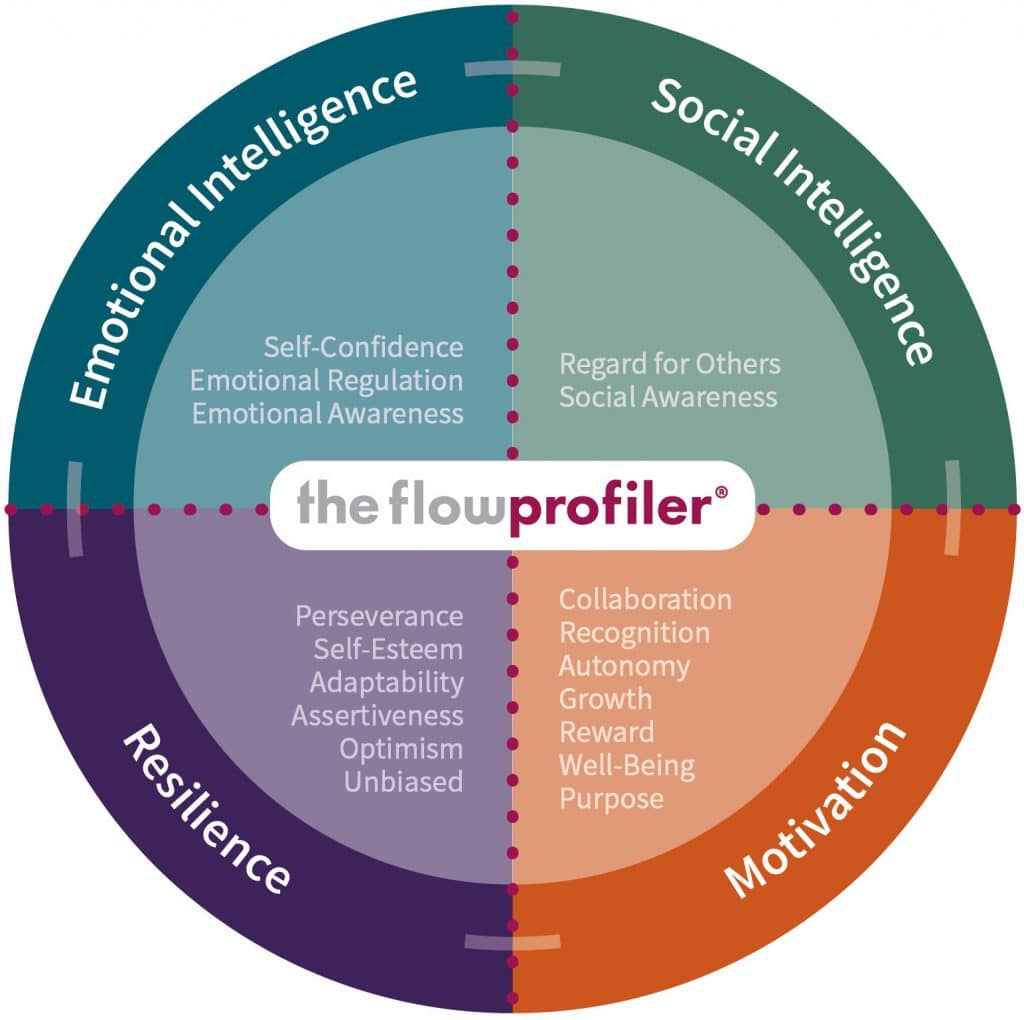
◦ a structured lens for understanding leadership behaviour as a dynamic variable
◦ visibility of behavioural overuse and underuse that can distort outcomes
◦ a shared language for discussing leadership behaviour in decision contexts
◦ insight into behavioural risk before it is reflected in performance failure
In this sense, flowprofiler® supports leadership decisions by making behaviour explicit, contextual, and proportionate to the demands of the role and environment.
What flowprofiler® is not
flowprofiler® is not:
◦ a personality test
◦ a competency framework
◦ an engagement or sentiment survey
◦ a coaching model or a one off development programme
It does not categorise leaders by type or style, predict behaviour based on fixed traits, or assess performance retrospectively through outcomes alone.
Instead, it focuses on how behaviour is expressed, intensified, constrained, or avoided as leadership demands change, and how those behavioural patterns shape delivery over time.
Why Behavioural Intelligence Matters Now
Leadership today is exercised in conditions that are less stable, less forgiving, and more exposed than in the past. Decision cycles are shorter. Complexity is higher. Accountability is more visible. There is less tolerance for sustained underperformance and less margin for behavioural error.
In this environment, leadership outcomes are shaped not only by what leaders know or intend, but by how consistently they regulate behaviour as demands intensify. Small behavioural shifts, when repeated over time, have a disproportionate impact on execution, trust, and organisational resilience.
Traditional leadership approaches tend to address performance after outcomes have already deteriorated. Behavioural intelligence shifts the focus earlier, to the patterns that influence outcomes before failure becomes visible.
As leadership roles carry greater consequence, the ability to examine behaviour as a dynamic, contextual variable becomes increasingly important. It allows organisations to move from hindsight explanations to foresight-informed decisions.
Behavioural intelligence does not replace capability, experience, or judgement. It complements them by making leadership behaviour explicit at the point where outcomes are formed.
Organisational outcomes are delivered through leadership behaviour, particularly under pressure. When behaviour remains unexamined, risk accumulates quietly and is often recognised only after performance has suffered.
A behavioural lens brings clarity to this space. It allows leadership behaviour to be discussed with the same seriousness as strategy, structure, and capability, not as a secondary or “soft” consideration, but as a central factor in delivery.
This is the role flowprofiler® is designed to play: to make leadership behaviour visible, contextual, and decision-relevant where organisational outcomes matter most.
Defining Leadership
❝Leadership is a societal influence that inspires, motivates and mobilises others towards a shared vision and common goals.❞ – flowprofiler®
❝Leadership is a societal influence that inspires, motivates and mobilises others towards a shared vision and common goals.❞ – flowprofiler®
Leadership isn’t just about a style, it’s about impact and a leader’s ability to bring others on the journey and drive results.
While there are many ways leaders can inspire, motivate and mobilise others, what truly defines effective leadership is how they do it.
Awareness, adaptability and accountability become essential qualities for any successful leader.
We expect a lot from our leaders, and the price of in-effective leadership is high.
“Only 15% employees are engaged in the workplace. This costs the world US$8,800,000,000,000 in lost productivity.”
– Gallop State of the Global Workplace 2023
At flowprofiler®, we understand that leadership success depends on more than technical skill, it’s driven by behaviours, mindset and capability.
Our Leadershipflow® Pathways are custom-built, fully integrated, and evidence-based journeys designed to develop leaders at every tier, emerging, operational, and executive, and aligned precisely to your organisation’s goals, values and culture.
❝In the world of leadership, the only thing you can truly control is your behaviour.
Master that, and you’ve mastered the essence of leadership in flow.
– flowprofiler®
We offer two Leadershipflow® Pathways:
Let us bring our expertise to your business and watch your leaders drive results
Pathway 2 | Create your own:
Choose from our workshops and assessments
Leadershipflow® Pathway 1:
Customised Pathways that Drive Results
Every pathway begins with your organisation’s goals, messaging, culture and leaders. But Leadershipflow® Pathways don’t stop there!
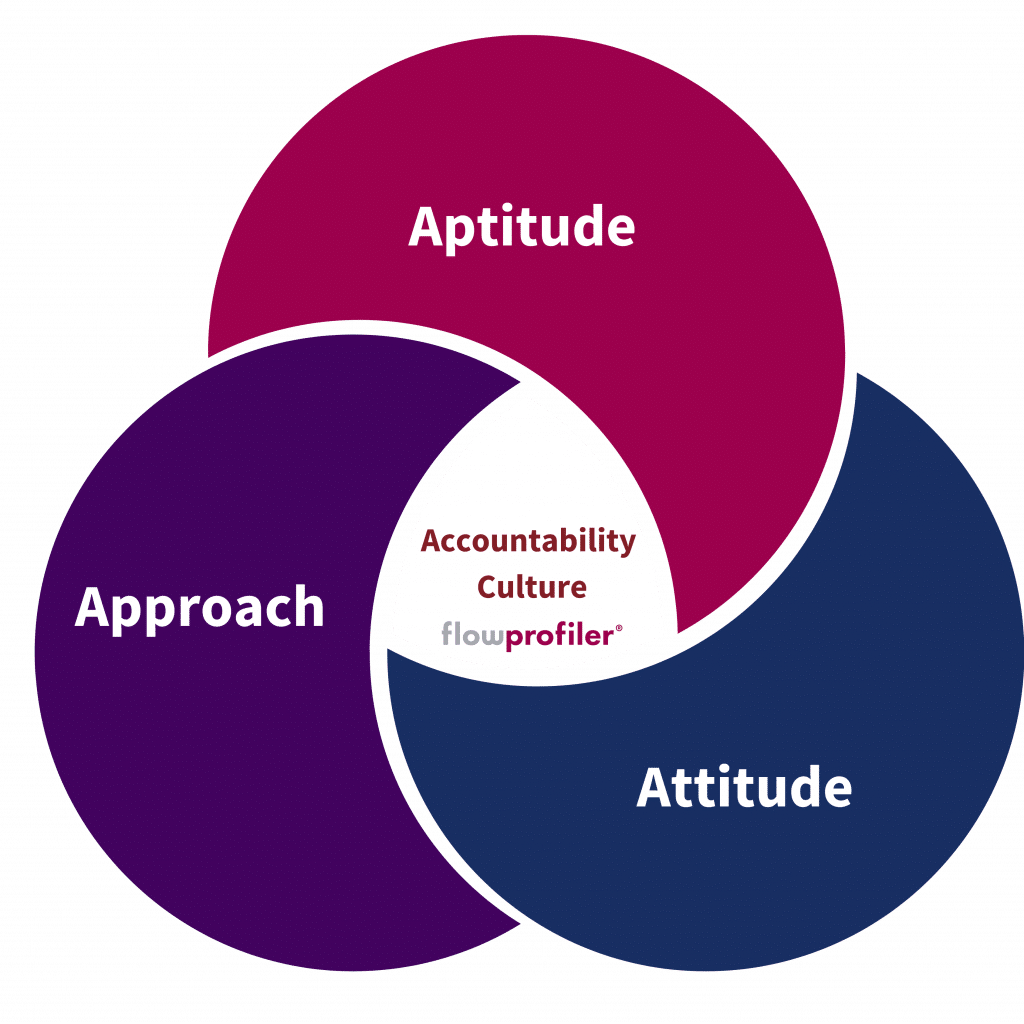
We use flowprofiler®’s Triple A Framework, Aptitude, Attitude and Approach, to map the competencies your leaders need to drive measurable, behavioural change. We then focus on the competencies they require to be successful in their roles.
Each stage of the pathway is data-driven, blending individual and team reports from flowprofiler® assessments across Emotional Intelligence, Resilience and Motivation.
What your pathway looks like depends on where your leaders are today and what your organisation needs tomorrow.
Our three-stage model, Discover, Align, Equip, ensures learning is practical, measurable and deeply connected to business outcomes. From discovery audits and stakeholder analysis to SkillSprints™ and team reviews, Leadershipflow® embeds development directly into daily performance.
The 10 Reasons Leadershipflow® is Different
- Custom built for your business: Tailored pathways aligned to your strategy, goals and values.
- Scalable across leadership tiers: From emerging to executive, each pathway meets leaders where they are.
- Catalyst for cultural and strategic change: Turns organisational values into everyday behaviours.
- Builds accountability: SkillSprints™, reflection, and transparent reporting create lasting ownership.
- Drives engagement: Co-created by your leaders, ensuring relevance, participation and buy-in.
- Measured and tracked: Data-driven insights through flowprofiler® assessments and team analytics.
- Aligned and integrated: Connects leadership development directly to business performance metrics.
- Blended and Accelerated learning: Draws on adult discovery learning model incorporating SkillSprints™ for immediate application. Supported by flowprofiler®’s learning portal, ‘flowprofiler® Learn’ for post session support.
- Inspires flow state: Leaders learn to operate in their optimal zone of focus, balance and performance.
- Powered by flowprofiler®: Backed by validated psychometrics that build behavioural agility and adaptability.

❝Get of the fence and give it a go!❞
– John Cummings, CEO, JC&S Pty Ltd
Leadershipflow® Pathway 2:
Design Your Own Leadership Programme
- Adapted to the needs of your organisation: Build your own leadership programme. Choose from over 40 workshops.
- Tailored to every leader: Use any of flowprofiler.’s 4 assessments to measure your leaderʼs behavioural competencies ensuring that your programme is tailored to the learning journey of every leader.
- A learning journey: Our learning journeys provide actionable outcomes and builds accountability within your organisation.
Step 1: Set your development goals for your leaders
Step 2: Choose from any combination of over 40 workshops
Step 3: Select the flowprofiler® assessment that best fits the behavioural competencies supporting your chosen workshop
Step 4: We’ll deliver your leadership programme
Choose your workshops:
❝Leadership is the capacity to translate vision into reality.
If you can’t self-regulate, if you can’t self-manage, if you can’t self-motivate, then how can you possibly lead others in a meaningful way?
– Prof. Warren Bennis, Leadership Guru

❝The Leadershipflow® Pathway has made a huge difference for us as a leadership team.I have seen a big shift in our leaders. It is really hitting home.❞
❝flowprofiler® makes a difference. Not everyone is the same. To know what a person’s behavioural strengths and weaknesses are is key. To be able to work around or with these behaviours makes the world of difference.❞

❝The motivationflow® assessment provided me with a BFO (blinding flash of the obvious), that I am very privileged to be doing work that I love while working with a lean, highly motivated and professional team.❞

❝We’ve noticed a big shift in spending time and coaching our existing leaders and coaching our existing employees, and mentor them through change. It’s made them become more confident and mature in the way in which they lead their teams. They have filled in the questionnaire. It’s them. It’s their own feedback. To have that presented to them in the way in which we’ve sold it, it’s a gift!❞
❝flowprofiler® encapsulates all the aspects that I have been doing and driving through my leadership workshops and coaching work for 3 years now, and brings it to a perfect close.❞

❝As I work more in the leadership space, I have found good people ‘killing’ themselves in their jobs. flowprofiler® has become the perfect diagnostic tool to help individuals become aware and then make the right choices.❞
❝It’s really had an impact on morale because we’re really investing in our people. As a leader, you must adapt. You can’t have the same leadership style for all of your team. We’re all different.❞
❝The motivationflow® assessment was significant for me at a personal level. I realised I have built a highly professional, self-motivated and autonomous team that does not need to be managed. I equally learnt that what motivates me is delivering value to our clients and not necessarily growing or managing a bigger team.❞
❝The motivationflow® assessment was significant for me at a personal level. I realised I have built a highly professional, self-motivated and autonomous team that does not need to be managed. I equally learnt that what motivates me is delivering value to our clients and not necessarily growing or managing a bigger team.❞
❝To have that insight into how people are day to day and under pressure can really help our leaders motivate, manage and set objectives.❞
❝As a leader, you must adapt. You can’t have the same leadership style for all of your team. We’re all different. We all will react differently to reward. We all will react differently to wellbeing. To have that insight into how people are day today and under pressure can really help our leaders motivate, manage and set objectives.❞

❝Working with Beck and Iain has helped us truly live our value of Grow & Evolve.
They’ve supported us in spotting emerging leaders, leaning into our strengths, and building the emotional awareness to work better together.
It’s helped us understand one another, communicate more openly, and stay focused on our shared goals.❞
❝The programme has delivered real, tangible outcomes for both myself and our team.

❝We are excited with the promise that flowprofiler®️ brings; one that will allow our clients to shape their people and their organisation to be agile, adaptable and ready for the opportunities in the future.❞
Sharmini Suthan, Managing Partner, BeInClarity, Singapore